
Howwework,andwhyweworkthatway.
Five things decide what a morning here looks like. Every one of them is written down, argued for in public, and open to anyone who wants to use it in their own setting.
01
Outdoors every day
Rain is just weather
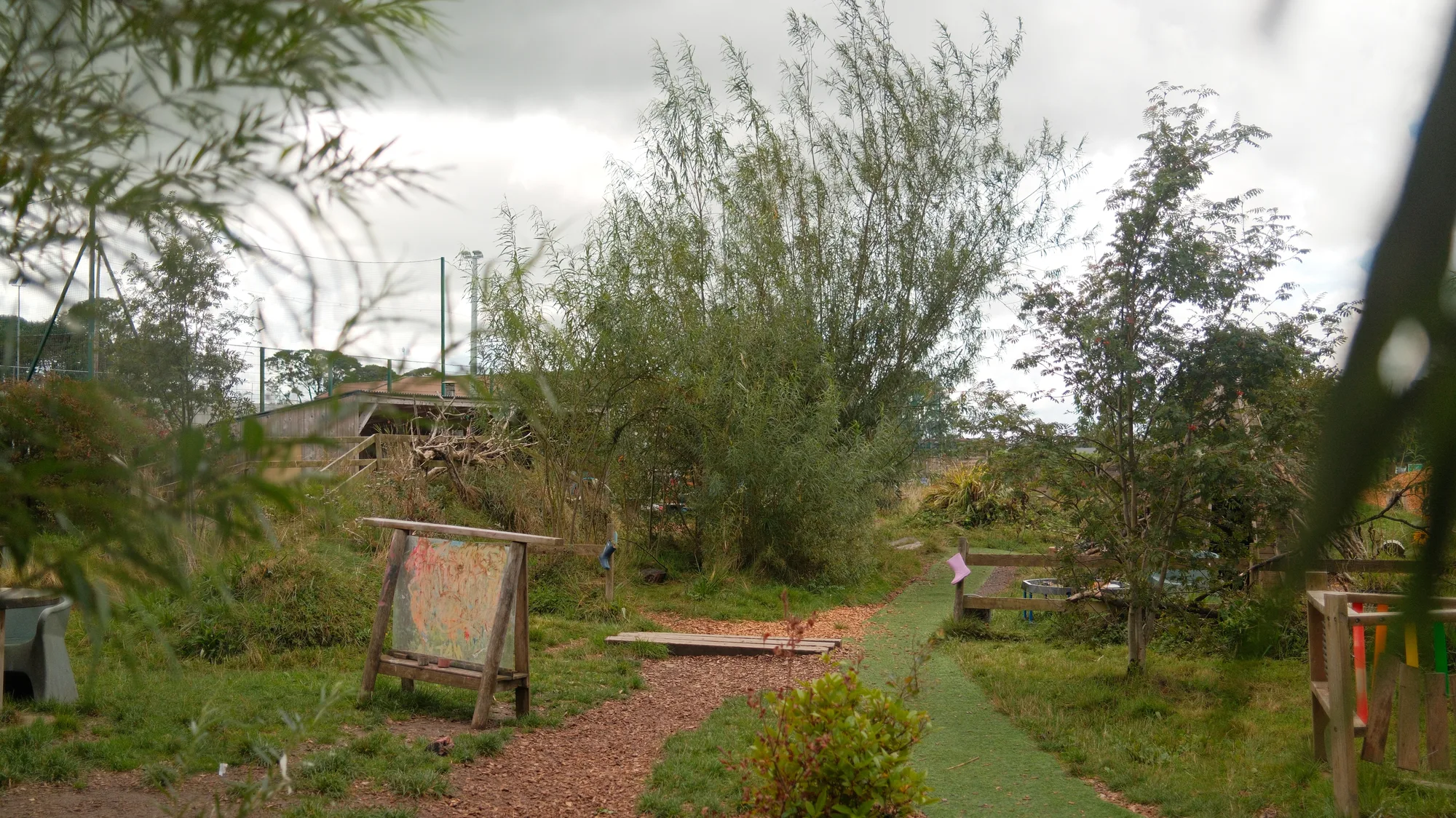
Outdoor is the ordinary shape of the day rather than a reward for good weather. The children are outside in whatever the day brings, and that takes preparation rather than nerve.
The ground is set up so children meet real challenge in a place designed for it. Mud, trees, real tools and weather, with educators who prepare the area before the children reach it. The educators know when to stand back and when to step in, which is the part that takes years of experience rather than a training day.
***The model came home from Norway. Sharon travelled there on an Erasmus+ project, saw what childhood looks like when it lives outside, and rebuilt our days around it. She calls it the pivotal point of her career. The practice built here went on to inform Tusla's national guidance for outdoor services, When the Roof is the Sky, published in 2023.***
What it does for a child is steady rather than dramatic: better balance, better immune systems, better friendships, and a childhood that smells of grass instead of sanitiser.
See a day at The Willows →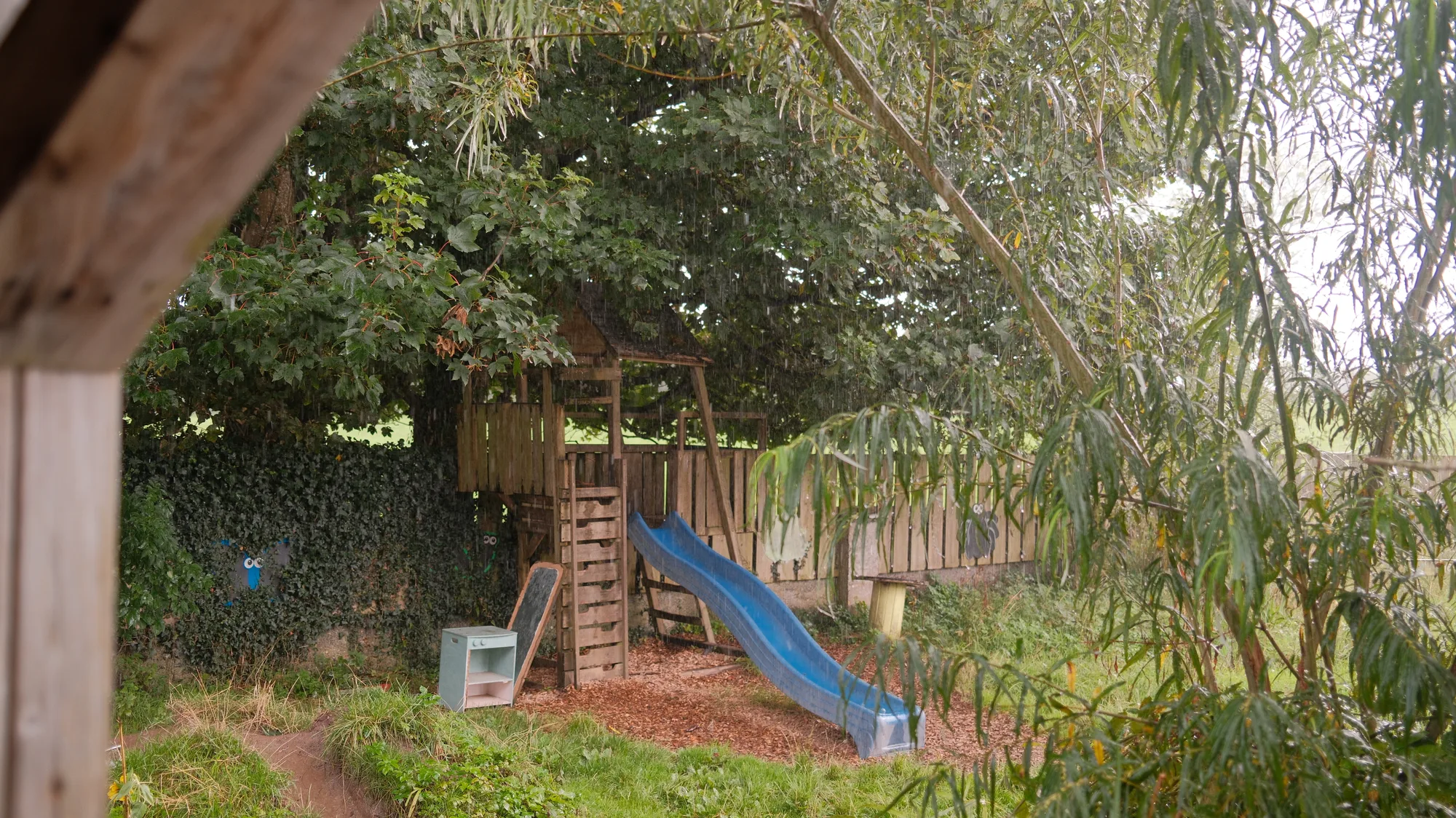
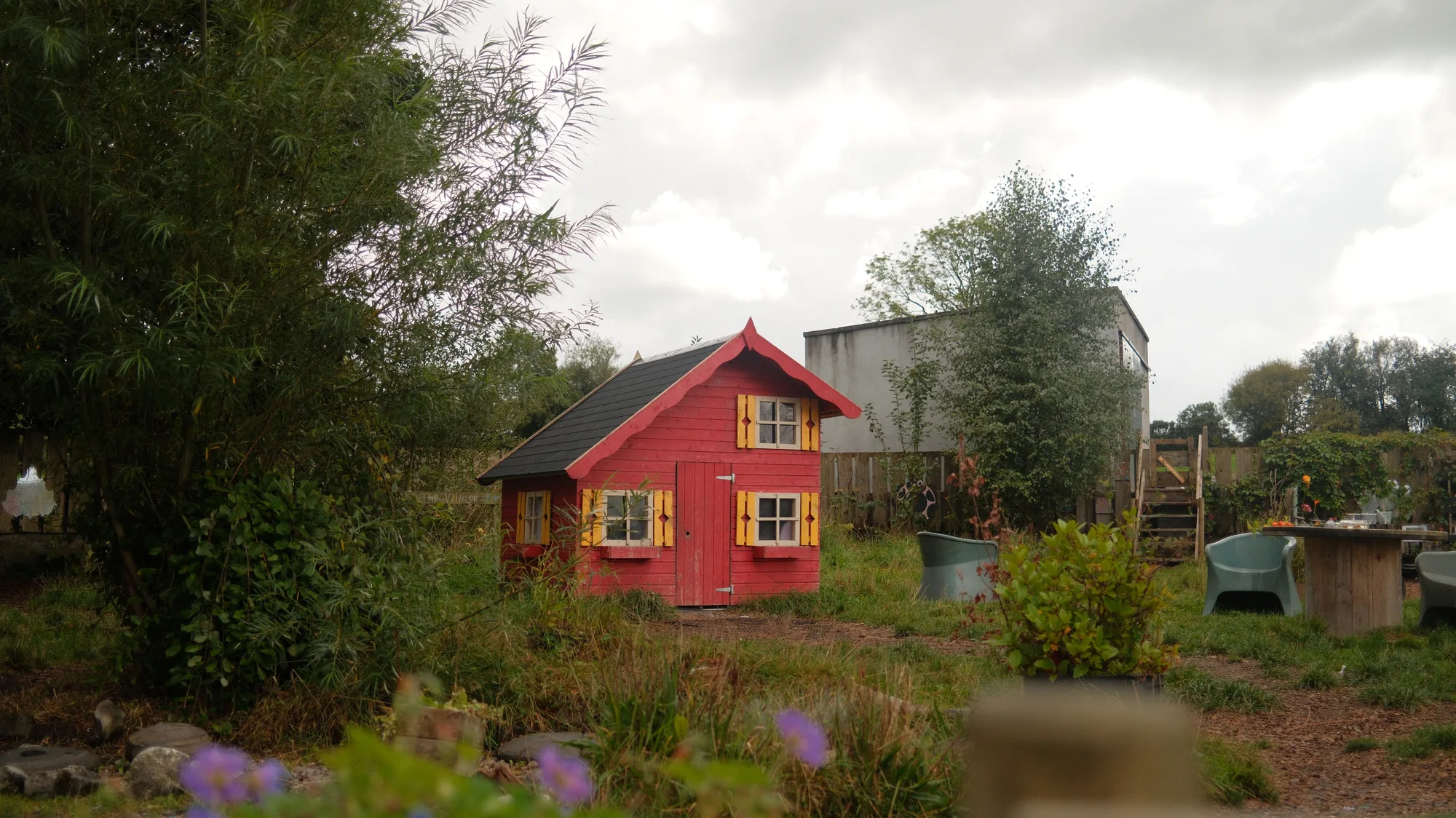
“Rain is just weather.”
Dr Sharon Skehill, Founder and Managing Director
02
Rights and identity
Babies and toddlers are people now, not adults in waiting
Practice here starts from the position that the youngest children hold rights today, in the area they are standing in, and that a setting either makes those rights real in its ordinary routines or it does not.
That is the argument of Babies' and Toddlers' Rights in Practice, written by Dr Mary Moloney, Sharon Skehill and Dr Jennifer Pope and published by Boru Press in 2025. It was launched at Mary Immaculate College by Professor Laura Lundy of Queen's University Belfast, whose model of participation the book builds on.
Alongside rights sits identity: a child's sense of who they are, where they come from and what they are good at. Sharon's doctorate examined how early years settings include every child, and that work runs straight into how a room here is arranged, how a day is planned, and who gets asked what they think about it.
She is currently a part-time Research Specialist at TU Dublin on the revision of the sector's Diversity, Equality and Inclusion Charter, which is the same question asked at national scale.
Read the research →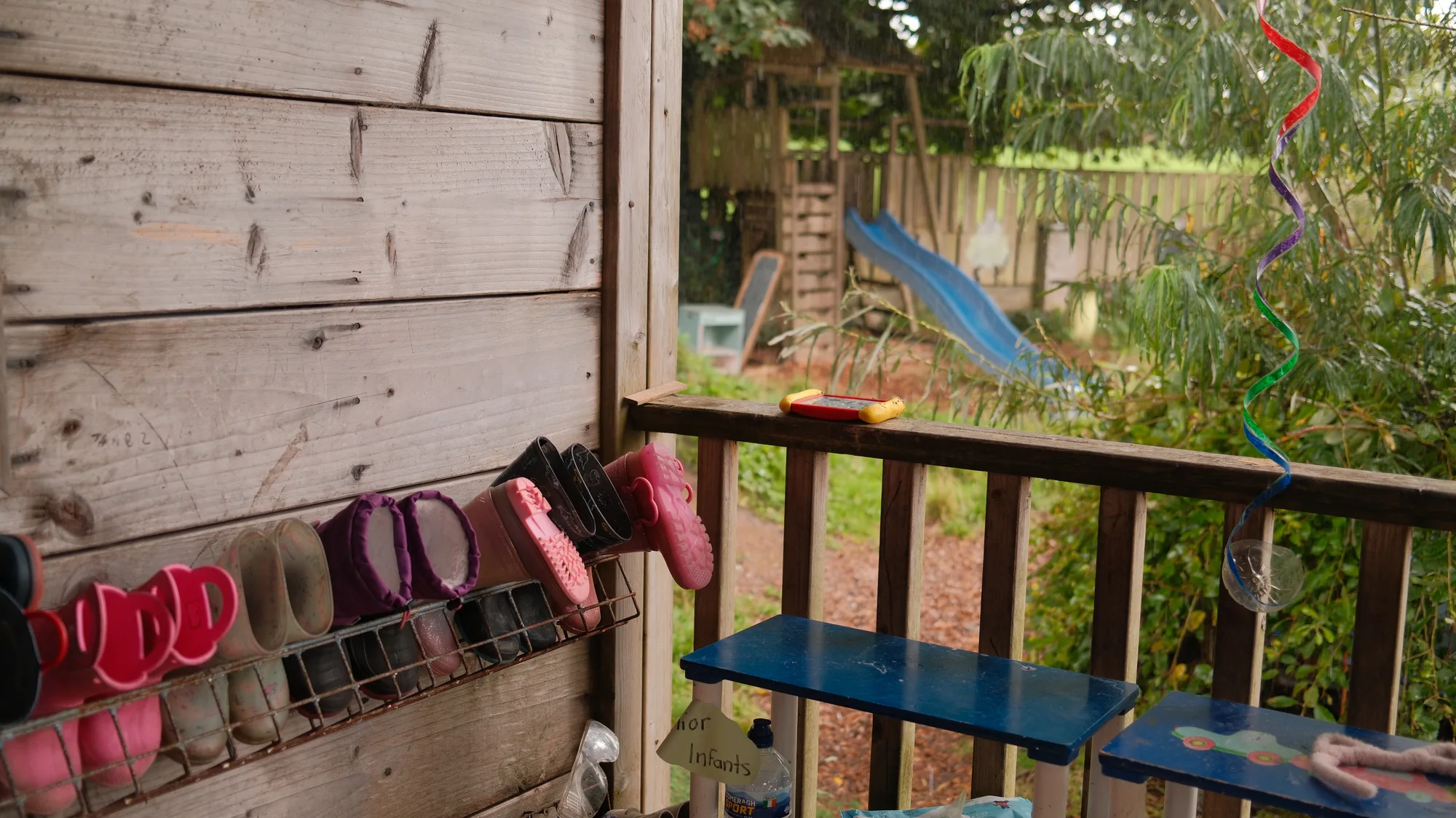
03
Aistear in practice
The national curriculum, as it looks on a wet Tuesday
Aistear is Ireland's early childhood curriculum framework. It sets out four themes, Well-being, Identity and Belonging, Communicating, and Exploring and Thinking. It deliberately does not tell a setting what to do on any given morning.
Sharon worked on the update of Aistear as an Education Officer at the NCCA, so the framework here is as clear as it comes. It is the language the team plans and assesses in, and the reason a learning story is written the way it is.
In practice that means the themes are read through the outdoors. Well-being is a child who can dress themselves for the weather and knows where the shelter is. Identity and Belonging is a name on a peg and a job that is theirs. Communicating is two children negotiating over one plank. Exploring and Thinking is what happens when the plank does not reach.
The team takes notice of what's going on around them, and document those moments as learning stories, and they go in to the child's individual learning journals.
Learning stories from the floor →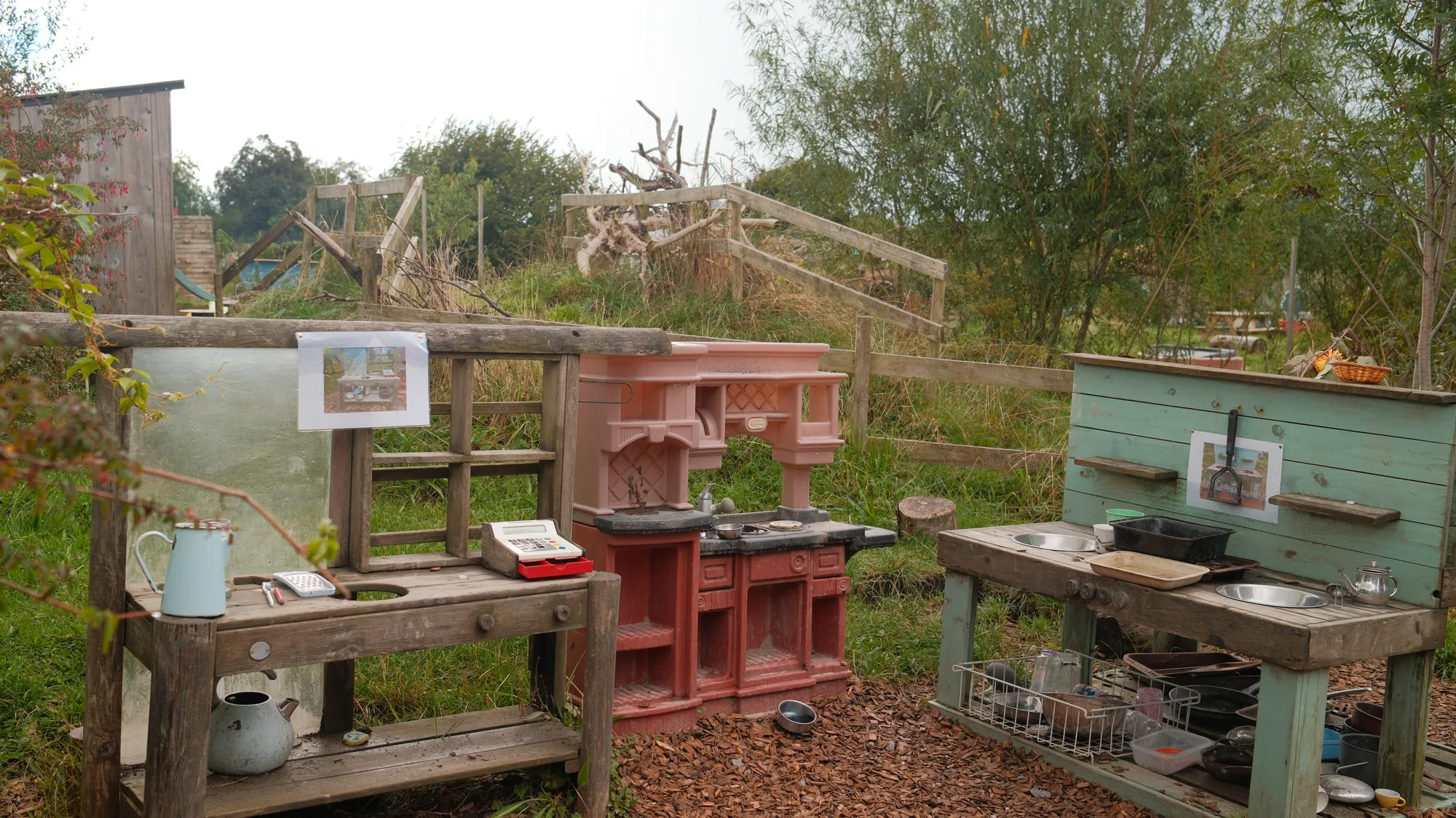
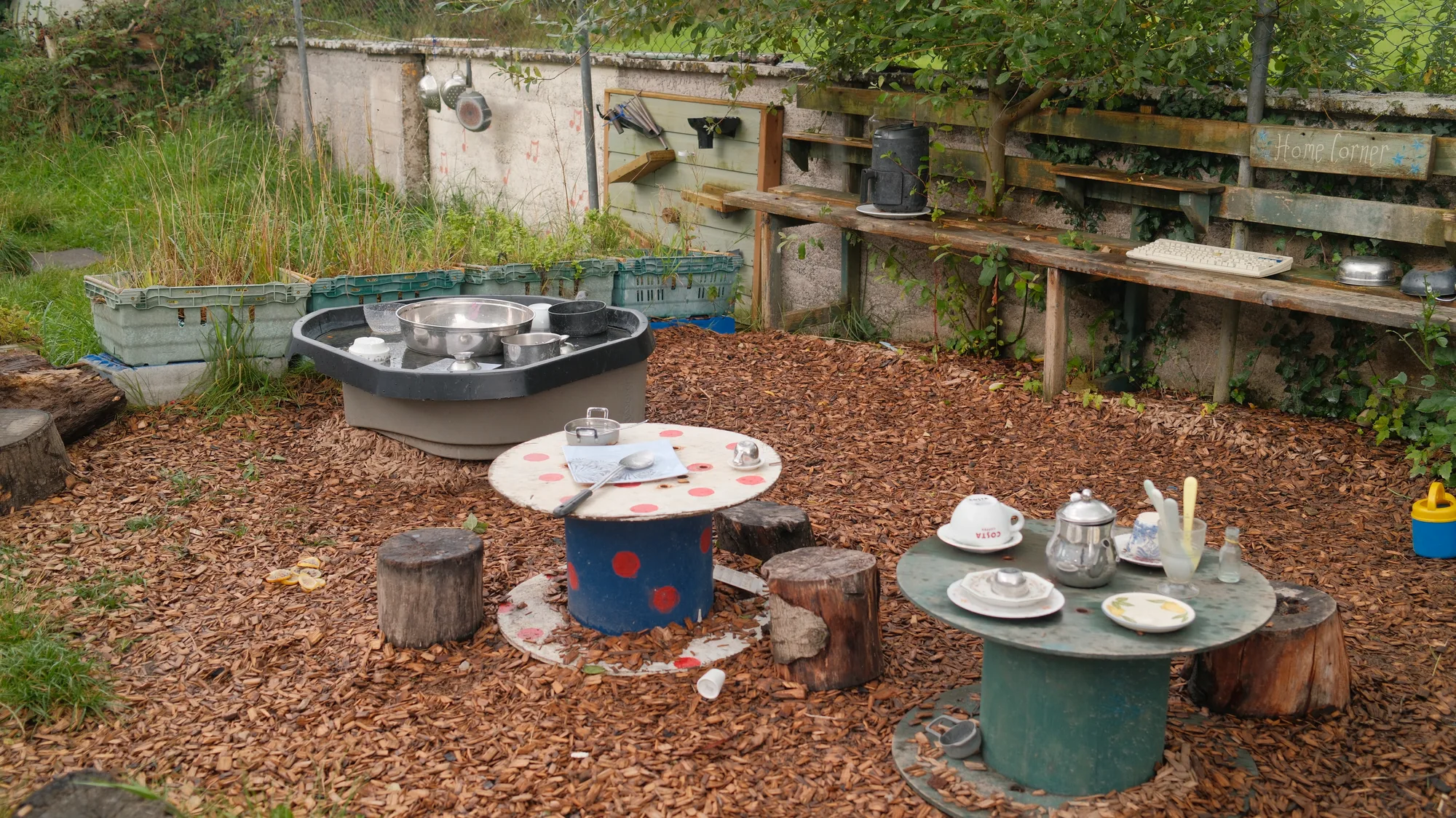
Round outdoor tables and a tyre table in the garden.
05
Our framework
NOD, and what it asks an educator to do
The book introduces two frameworks, NOD and STRIVE, as tools for turning the rights position into something an educator can actually do on a Tuesday morning rather than agree with at a conference.
They are the frameworks the team here is being trained on and writing about, and the write-ups appear on the Practice page as they are finished.
[VERIFY how Sharon would like NOD and STRIVE described in her own words, including what each letter stands for. Nothing is spelled out here until she has written it, because a framework summarised wrongly by a website is worse than one that is only named.]
Anyone working on the same problem is welcome to ask about any of it. That is what the contact form is for, and it goes to Aishling and Sharon.
Publications and projects →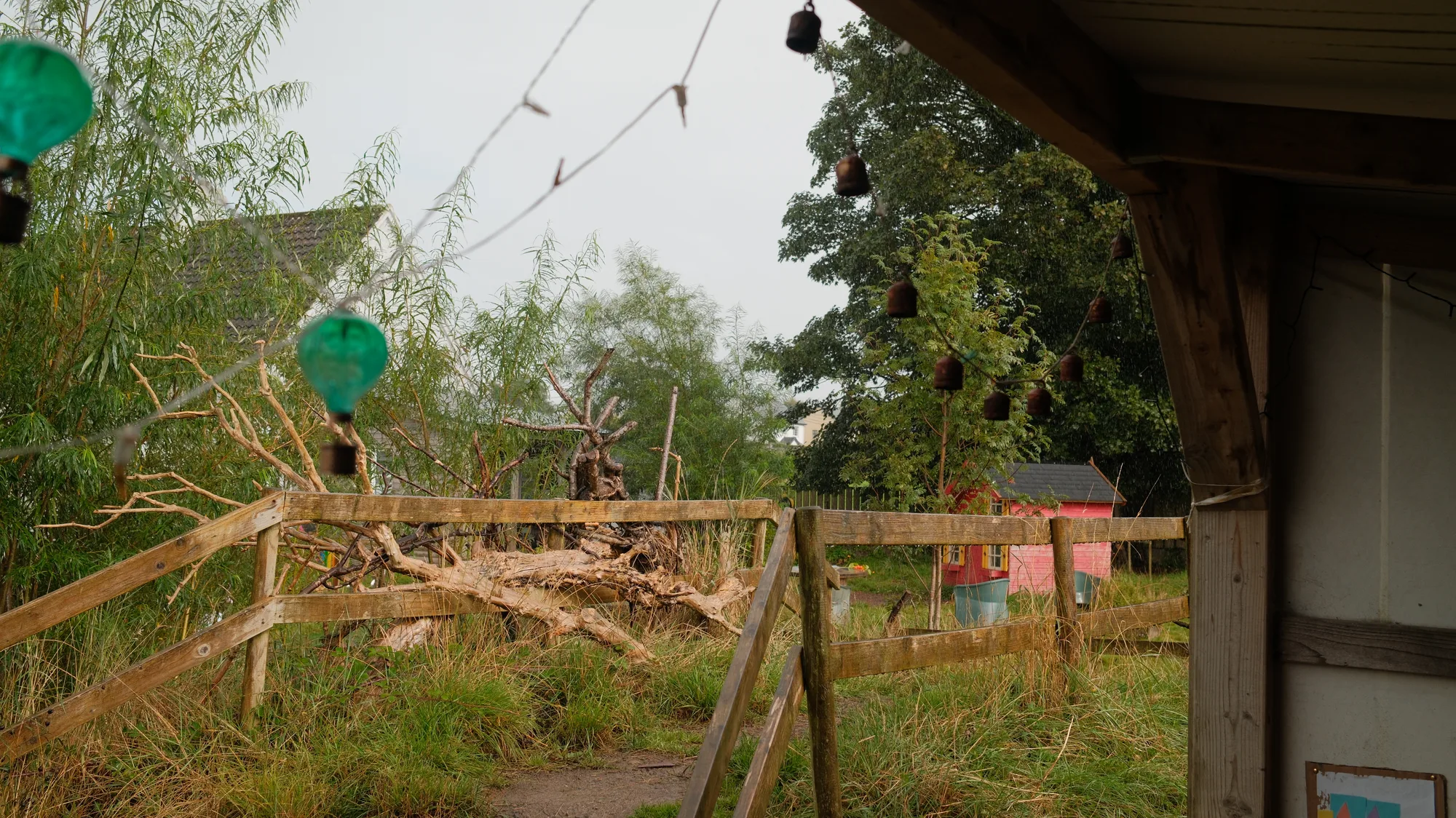
Sources: Tusla Early Years Register, Galway, February 2026; Babies' and Toddlers' Rights in Practice, Boru Press, 2025; Tusla, When the Roof is the Sky, 2023.
Three facts a peer setting can check without asking us, before any of the argument above is worth reading.
on the Tusla Early Years Register: TU2015GY198 and TU2015GY199
Two services
the qualification range across the educator team
Level 5 to PhD
the year our outdoor practice informed Tusla's national guidance, When the Roof is the Sky
2023
Registration details are from the Tusla Early Years Register for Galway, February 2026.
The approach, on the ground.
Three places to see the same thinking doing its day job.
Learning stories from the floor
Curriculum updates and notes written by the educators who were there, free to read and to use in your own setting.
Read practice →Publications and projects
The book, the conference work and the action research going on in the setting, with what we can share free to download.
See the research →A day at The Willows
What the approach looks like from arrival to home time, on our own ground, in whatever the weather is doing.
See The Willows →Working on the same
questions we are?
Educators, settings, students, researchers and policy makers: visits, questions and collaboration are all welcome. Enquiries go to Aishling and Sharon.
04
A social enterprise
Quality and affordability, held together on purpose
Newtown Kids Club operates as a social enterprise model, ensuring quality and affordable provision for families in our community. That is Sharon's own description of the business and it is the reason the two words sit in the same sentence.
What it means in practice is that what the setting earns goes back into the setting: into the ground, into the materials, and into the educators, whose qualifications run from Level 5 to doctoral degrees.
It also decides what this website is for. A setting that publishes its practice is giving away the part other settings would otherwise have to pay a consultant for, and that is the point rather than a side effect.
[VERIFY the registered entity name and CRO number, and whether Sharon wants the social enterprise model described in any more detail than this.]
Fees and funding →